Tighter World Cup race as gap narrows on hosts Australia

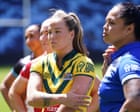
The three-time world champion Jillaroos retain a clear advantage but face a significantly closer title race at the 2026 Women’s Rugby League World Cup in Australia, with New Zealand and England among the primary threats to their defence.
The women’s game has changed rapidly since the previous World Cup, the NRLW having expanded from six teams and five rounds to 12 teams and 11 rounds and gained regular broadcast airtime across the Australian winter. Women’s State of Origin has also developed into a three-match series, drawing crowds in excess of 20,000 and broadcast audiences of over two million viewers per match.
That domestic growth has strengthened teams beyond Australia: current NRLW players now feature across the majority of sides at the 2026 World Cup, while the doubled NRLW player pool has created more opportunities for international representation and allowed Australian players from diverse cultural backgrounds to represent countries linked to their parents and grandparents. Increased visibility in the NRLW has made it easier for those players to be recruited by overseas coaches for the tournament.
Despite being favourites to replicate their 2022 triumph — when they beat New Zealand 54-4 in the final — the Jillaroos face what is being described as the closest World Cup in history. Eight teams will contest the title: five returnees from 2022 (Australia, New Zealand, England, Papua New Guinea and France), newcomers Fiji and Wales making their first appearances, and Samoa competing at the tournament for the first time since 2003.
New Zealand and England are singled out as the likeliest challengers. The Kiwi Ferns travel with a full squad of NRLW players, including Canberra Raiders and former Queensland Maroons halfback Zahara Temara and Sydney Roosters premiership-winning prop Otesa Pule. England’s squad draws on Super League experience, with nine players from Wigan Warriors, and is bolstered by several NRLW players, notably Roosters second rower Jasmin Strange.
Australia’s advantage stems in part from squad cohesion: eight Jillaroos come from the Sydney Roosters — who were undefeated NRLW premiers in 2026 — and 13 from the NSW Sky Blues, winners of the 2026 State of Origin series in a 3-0 whitewash. That concentration of players who have trained and won together gives coach Jess Skinner selection choices from a deep pool as she finalises teams for the tournament’s big games.
A key selection subplot is the halfback contest between State of Origin-winning half Jesse Southwell and NRLW premiership-winning half Tarryn Aiken; Aiken’s recent success has been judged to give her the edge and she has been named at halfback for the opening match against Samoa. Roosters and Sky Blues five-eighth Jocelyn Kelleher has been named to make her Australian debut in the opener; her kicking accuracy in the NRLW grand final, which troubled opposition kick chasers and helped create multiple tries with fifth-tackle options, and her club combinations with Aiken and Southwell support her selection.
Former captain Ali Brigginshaw, who retired from the NRLW after this year’s grand final, was not selected in the squad and will watch from the stands, while Sky Blues and Sydney Roosters captain Isabelle Kelly assumes the team’s leadership role.
Australia begin their World Cup campaign against Samoa in the opening match, with Tarryn Aiken named at halfback and Jocelyn Kelleher set to make her Australian debut.