US, Mexico, Costa Rica and Jamaica bid for 2031 Women’s World Cup to be ratified in Zurich

A US-led joint bid from the United States, Mexico, Costa Rica and Jamaica to host the 2031 Women’s World Cup will be confirmed at an Extraordinary Fifa Congress in Zurich on Monday, with the prospective hosts projecting total revenues of $4bn.
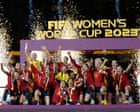
The bid will be formally ratified by a vote of Fifa’s 211 member associations. The bidders say the $4bn target contrasts with the $570m earned by the 2023 tournament in Australia and New Zealand, which the article notes was the first women’s World Cup to break even; Fifa is forecasting almost $1bn in revenues for the 2027 tournament in Brazil, and the bid team acknowledges achieving further fourfold growth to $4bn by 2031 would be challenging. Gianni Infantino told national associations the federation’s revenue projection for the 2023-2026 cycle increased from $11bn to $15bn, and US Soccer has based its $4bn estimate on $1.4bn from commercial deals, $1.25bn in matchday revenue and $1bn in broadcast income.
Emily Cosler, US Soccer’s vice-president of strategy, who will present the bid in Zurich, said: "We expect and plan for the 2031 Women’s World Cup to be the largest women’s sporting event in history." She added that the increase would follow continued progress at the 2027 tournament and the scale of the US market.
The bid book proposes expanding the tournament to 48 teams, raising the number of matches from 64 to 104, and relies heavily on large stadiums: 13 of the provisional shortlist of 20 venues in the official bid have capacities above 60,000. The shortlist comprises 14 US venues, four in Mexico and one each in Jamaica and Costa Rica; seven US stadiums on that list hosted matches at the 2026 World Cup and three others staged games at the 2025 Fifa Club World Cup.
Organizers are targeting 4.5 million tickets sold, which they say would produce average crowds of 43,000 per match and ticket revenue of $550m, compared with $43m from 1.8 million tickets in 2023. The bid also projects $300m in hospitality sales and $400m in other match-day income such as merchandising, parking and transport.
The bid contains 50 potential stadiums across 35 cities, with Fifa to make the final venue selections by the end of 2028; the hosts note all US venues are operational except a proposed redevelopment of Washington’s RFK Stadium, which is under consideration and due for completion in 2030. Mercedes-Benz Stadium (Atlanta), AT&T Stadium (Dallas), SoFi Stadium (Los Angeles) and MetLife Stadium (New Jersey) are identified in the bid as the most likely candidates to host the final, though that decision will not be taken until 2030. Cosler said: "We think every knockout round can be in a 60,000-plus seat stadium. We've got the infrastructure to do that, and I have a high level of confidence that every knockout round game can be a sellout. The success of our women's national team and the NWSL has proven that we've got the demand for that."
Fifa’s Evaluation Report says ticketing and hospitality revenues should "significantly exceed" the $550m forecast and describes that figure as "a very conservative position with significant upside potential." The bid proposes group-stage tickets priced from $35 to $120 and final tickets from $120 to $600. On pricing and access Cosler said: "We propose a pricing table that balances what the women deserve in terms of the revenue generated from this tournament, but also access in a way that will continue to grow the game," and added, "We've partnered with local universities. We've offered $25 tickets that have resulted in filling stadiums and success. This isn't a charity, but at the same time, we want this game to be accessible to fandom everywhere."
Commercially, the bid projects $1.4bn in sponsorship revenue for 2031; Fifa sold $270m from the first separate sale of Women's World Cup rights in 2023 and had sold $424m of rights for Brazil at the time of the article. Independent analysis by Nielsen Sports predicted global TV viewers would increase by 58% from Brazil because of the expansion to 104 matches and more favourable time zones for the North American audience. On local commercial control and negotiation Cosler said: "I think the end state we ultimately arrived at in 2026 resulted in a really successful tournament. Fortunately we can start there from a negotiation perspective, rather than where we maybe were six or seven years ago. Contracts were signed eight years beforehand in a way that didn't reflect the nuances of the business model."
The bid forecasts an additional $400m in ancillary gameday revenues from merchandising, fan fests, parking and transport and acknowledges previous disputes over such items during World Cup preparations. Fifa has agreed a hybrid approach to fan fests and Cosler described varying city strategies: "Each city ultimately had a slightly different fan fest strategy. There's been a willingness and openness from Fifa to continue to have flexibility in that. So you might see an instance in which a city has one fan fest, like Atlanta right next to the stadium, but other cities could go down a route where there's a couple of smaller fan fests around different neighborhoods of the cities." On transport and security funding she added: "We also have a greater understanding around the importance of funding, and the prices of public transit and security. So that will all act as the starting point. I expect a lot less friction. We're starting in a slightly different position this time around. Of course, cities will still have to contribute. We're not saying that Fifa is going to cut the check for everything, but I think it will be a more equitable type model."
Fifa will vote on ratifying the US-led joint bid at the Extraordinary Congress on Monday, and the governing body is scheduled to decide the final city and stadium selections by the end of 2028, with the specific venue for the final to be chosen in 2030.