Verstappen says Las Vegas Grand Prix win "isn't Formula One" despite victory

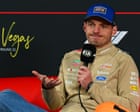
Max Verstappen said his victory at the Las Vegas Grand Prix on Saturday was not true to the spirit of Formula One and not how he wants to race, despite defending and repeatedly retaking the lead to secure the win.
The race featured prolonged slipstream battles over 50 laps and produced 352 overtakes across the field, with the lead changing hands 35 times; Verstappen held off Lando Norris to win by six-tenths of a second after duelling with team-mate Isack Hadjar, George Russell, Kimi Antonelli and Norris. The unusual pattern of racing was linked in the paddock to the new regulations, including energy deployment and overtake modes, combined with the character of the Las Vegas circuit with its long straights and slow-speed corners.
Verstappen, who has been critical of the new regulations, said he took pleasure from the on-track battle but remained unconvinced it represented proper Formula One. “For me personally this isn’t Formula One, the way that we are racing. It looks great on TV but this isn’t how it should be,” he said.
Asked whether the spectacle was enjoyable, he contrasted his racer instincts with the entertainment value on display. “When I look at it from my racer heart, no. When you look at it as a show spectacle, yes,” he said.
He described the on-track experience in personal terms, including how relaxed he felt during the contest and the tactical battery management involved. “I enjoyed my repassing and everything but I prefer to look at it with my racing heart. Even my heart rate, I was not nervous at all because it just felt kind of cruising out there, just trying to press the battery whenever it was correct or defend. But for the show, when you look at it from the outside, probably, yes, you like it.”
Verstappen returned to a comparison used earlier in the season and repeated a Mario Kart reference after Las Vegas. “I probably shouldn’t say it. I probably should not. I remember winning one like this when I was playing Mario Kart,” he said. “Sometimes you drop back and you get drafts and there’s a catch-up. Always when you’re dropping back, you go faster. So that’s the last time that I felt something like this.”
McLaren’s Lando Norris praised the spectacle from a spectator perspective, saying the race delivered unpredictable moments and frequent position changes. “From a racing point of view, from the outside, I’m sure it probably was the best race ever in Formula One,” he said. “You never know what’s going to happen. There were overtakes out of nowhere. The thing is, sometimes you have a closing speed of 20-30km/h to people, especially to us and some of the overtakes weren’t overtakes, you press boost and you go past someone. But the racing was still good. You’re still fighting for position, and there are a lot of good things in there.”
Slipstreaming has historical precedent in Formula One in the 1960s and 70s and produced some of the sport’s closest finishes, including Peter Gethin’s 1971 Monza victory by one-hundredth of a second, with six-tenths separating the top five; teams earlier in the season had described the new energy-deployment-driven position changes as “yo-yo racing.”
Mercedes team principal Toto Wolff acknowledged the event would divide opinion but noted strong positive reactions from some fans, sponsors and from F1 leadership, and warned the Las Vegas pattern was unlikely to be replicated everywhere. “I guess you will have many people that will say that’s not racing. Personally, we need to be open minded,” he said. “Susie [Wolff’s wife] was in the paddock club and she said that for 90 minutes people were screaming with the overtakes. The instant feedback I got from the friends watching, our sponsors, was: ‘That was awesome.’ Stefano [Domenicali, F1 CEO] liked it very much. That’s not going to happen everywhere.”