Veterans and serving personnel take part in Lviv trials for Ukraine’s Invictus Games team in November 2026

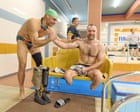
In November 2026 service personnel and veterans took part in national selection trials in Lviv for Ukraine’s team for the Invictus Games in Birmingham in July 2027. More than 400 wounded, injured and sick personnel attended the trials and the Duke of Sussex, Prince Harry, made a surprise visit to watch events and meet members of the Invictus community.
After four years of war Ukraine has more than 2 million veterans, including 1.4 million people with combatant status, and at least 11% of registered combatants live with service-related disabilities — the equivalent of more than 154,000 people. The Invictus movement in Ukraine has expanded from 15 competitors at the country’s first involvement in 2017 to more than 2,000 veterans and serving personnel, with Ukraine preparing its largest-ever team of 60 competitors for Birmingham 2027. More than 50 organisations have been created by members of Ukraine’s Invictus community to expand opportunities and support for veterans.
Archery trials were held inside the large Soviet-era velodrome arena at MoD SKA in Lviv, a facility noted in the trials as built for the 1980 Moscow Olympics and described as Ukraine’s only indoor cycling track; a late start to the first day gave archers extra time to stretch and practise while coaches offered last-minute advice. Other events took place across Lviv, including laser tag trials watched by family and friends, swimming heats at the Try Stykhii pool on the city outskirts, and wheelchair rugby matches at the Lviv Regional Youth Sports School inside Stryiskyi Park.
Competitors included Pavlo, who lost his left leg to a landmine in 2023 and has used swimming in his recovery, and Vadym, who suffered a frontline injury in 2022 and set a Ukrainian record for runners with below-knee amputations by completing the 42km Marine Corps Marathon in 3hrs 30m in October 2026. Supporters filled the blue-and-yellow seats surrounding the shooting line as hopeful archers prepared to draw their bows.
Several athletes shared detailed personal journeys. Artem, 37, from the Pokrovsk district, completed a powerlifting heat and trains in powerlifting, archery and adaptive hockey while covering up to 12 miles a day in his wheelchair. Another competitor named Artem, described as a 31-year-old marine from Mykolaiv who lost both upper limbs after being seriously wounded during a withdrawal from the Pokrovsk area, discovered archery while undergoing prosthetic rehabilitation in Lviv and uses his teeth and feet to draw his bow; Solomiia Trapeznikova assisted him and looked after Stitch, a five-month-old support dog belonging to another competitor. “I wasn’t sure how well I would do, but my coach convinced me that the Invictus Games aren’t about results, they’re about the community,” Artem said. He added: “So even gathering the courage, the fact that I still registered and that I was selected, that was already a victory for me: just to step up to the shooting line and shoot.”
Oleksandr, 38, who joined the Ukrainian army in 2023 after the birth of his daughter and now runs a dance studio with his wife, suffered severe leg injuries on 1 October 2024 when an artillery shell struck his dugout near Toretsk and had his right leg amputated below the knee; he entered the Lviv trials in November 2026 for indoor rowing, swimming and sitting volleyball. Maria says: “He’s got the strength, the enthusiasm to cheer others up, and he does it properly, and not just for the sake of it. And he’s also a cool dad, a nice dad. A nice husband. A strong person overall.” Liana, a serving chief sergeant who joined the military after the Maidan protests in 2014 and survived a mortar attack in 2022, returned to the trials after competing in the 2024 selection process and said: “That’s exactly why I came here: to get that boost of energy again. To prove to myself that I’m still capable-regardless of my weight or the health issues I’ve developed.” She added that psychological consultations were available and said: “The sessions are optional for those who have already participated in the games, and also who have come here just to do sports. But if you want to be selected for the Invectus Games in Birmingham, then you should have this session with the psychologist.”
Organisers and the Invictus community emphasised work beyond the trials, including support for adaptive sport activities, coach development and community-based programmes. Rob Owen, chief executive of the Invictus Games Foundation, said: “The scale of need in Ukraine is immense, and these trials are only one part of a much wider response. Recovery cannot wait for the war to end, and it is vital that wounded, injured and sick service personnel and veterans have opportunities to rebuild their lives now.” The foundation’s activity cited in Lviv includes helping veterans become instructors, supporting adaptive pickleball projects, and regional events run by figures such as Yaroslav; Mykhailo and his support dog Stitch participated in the opening ceremony, and Roman was interviewed by local media after a laser tag event.
The national selection trials in Lviv will feed into the team chosen to represent Ukraine at the Invictus Games in Birmingham in July 2027, with the country preparing a 60-competitor delegation for the event. The organisers say the trials are one element of a year-round programme intended to give wounded, injured and sick personnel and veterans continued access to sport and rehabilitation whether or not they are selected for the Games.