War severs Russian–Nordic Arctic hockey ties as CAS orders Russia’s return before men's world championship in Germany in May

The full-scale invasion of Ukraine in February 2022 and the suspension of contact between Russia and its Nordic neighbours have fractured long-standing friendships formed on Arctic ice hockey rinks, players and organisers say, a rupture that has intensified after the Court of Arbitration for Sport ordered the International Ice Hockey Federation to allow Russia back into international competition before the men's world championship in Germany in May.
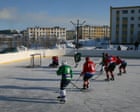
For years playing Russian teams was central to social life in northern communities. Janne Tervahauta, 51, of Tunturi-Kiekko in Ivalo, said the Barents Hockey League, which linked teams across the Arctic, went on hold during the pandemic and that “after the full-scale invasion of Ukraine, all contact with Russia was stopped.” He added: “This hockey league was amateur, and a kind of old guys league. But it was very important for us.”
Clubs such as RoKi of Rovaniemi regularly hosted and played Russian sides, including pre-season friendlies and summer training camps for Kontinental Hockey League teams, according to Mika Toivola, chief executive of RoKi Hockey. Toivola said there was “considerable cooperation between Finnish and Russian ice hockey” with Finnish players in Russia and Russian players in Finland. The halt in contact came just days after Finland beat Russian players to men’s ice hockey gold in the Beijing Winter Olympics; since the invasion national sides have not met, Finland joined Nato and the long border between the two nations completely closed.
The Court of Arbitration for Sport ruling that ordered the IIHF to permit Russia’s return has prompted a series of boycott commitments. The head of the Finnish ice hockey association said it would boycott games against Russia, and Sweden, Norway, Denmark, the Czech Republic, Austria, Latvia and Canada have followed suit.
Toivola said: “At RoKi, we unequivocally condemn Russia’s war of aggression against Ukraine.” He added: “We believe that allowing Russian national teams to return to major international tournaments is wrong while Russia continues its war of aggression.” He also said that while he hopes “peaceful sporting cooperation” will one day again become possible between Finland and Russia, ending the war in Ukraine is the “first prerequisite” to starting the long journey to rebuilding trust and cooperation and that “We must also remember the Ukrainian players, clubs and families whose daily lives are affected by the war. This discussion is about more than who gets to compete for a world championship.”
On a local level, players and organisers say personal connections have been lost. William Sjøstrand of the Kirkenes Puckers, featured in the documentary Puckers, said he maintains contact with Russian counterparts and that “We wait for the time when we can restart our game.” Organisers noted that, with Kirkenes distant from other Norwegian towns and several Russian towns comparatively close, ending cooperation was a significant loss for clubs in the border region.
Margrethe Alnes, an adviser and project coordinator at the Barents Secretariat, said the Barents Hockey League “created something unique” with “very good friendships and activities both for grownups and children. It went on for at least 10 years.” She added: “The last four years … had destroyed much of what was created during that time and work that was done to break down prejudice. It’s really sad that it’s all ended. It was inevitable, but still.” She warned that “When the war ends sometime in the future, it will take some time to build up the trust again.”
The CAS decision means Russia’s potential reinstatement now looms ahead of the men’s world championship in Germany in May, while Finland and several other national associations remain committed to boycotting matches against Russia, leaving participation at that tournament uncertain.