What remains after the World Cup is a messy, fragile hope

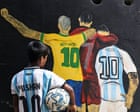
The World Cup final at MetLife Stadium on Sunday night turned into a study of fast-changing loyalties, with supporters adopting temporary identities and celebrities adopting unlikely allegiances. The match showed that for the vast majority of people — 98.9% who are neither Spanish nor Argentinian — picking a side can be more about immediate preference than permanent national feeling.
For many spectators the choice of team was pragmatic or cosmetic: a preference for the Spain kit, admiration for Lionel Messi, a residual grievance about the Falklands or Diego Maradona, disagreement with the Pedro Sánchez government’s stance on Palestine/Israel, or even the memory of a dodgy empanada on a gap year. The event felt less like a battle of nations and more like an occasion for spectators to locate themselves briefly in somebody else’s story. Those passing allegiances were visible not only among ordinary fans but across the celebrity contingent in the stands.
That melting pot was literal at MetLife Stadium, where personalities and fandoms collided. The former heavyweight boxing champion Mike Tyson was wearing an Argentina shirt, while the comedian Trevor Noah wore a Spain shirt. Ticket sales data suggests that an overwhelming proportion of the crowd was American, making what many consider the most consequential fixture in international sport read like a grand cosplay for the New Jersey leisure market.
The ease with which large numbers of people adopted an outside identity on the night underlined how elastic contemporary sporting allegiance has become. For much of modern history, international football fixtures served as a focal point for national feeling; this tournament revealed how those loyalties can be fleeting and performative. Rather than a simple contest between two homogenous blocs, the final became an assemblage of small theatrical acts of support and identity.
The examples in the stadium — from celebrity shirts to the demographics implied by ticket sales — undercut any neat narrative that the sport still functions primarily as a channel for fixed national belonging. Instead, the game operated as a space where a wide range of personal histories and political positions could be briefly enacted through support for one side or another. That fractured, improvised character was as striking as the match itself.
Even as the match concluded and one team emerged victorious, the broader scene suggested that the tournament’s cultural aftershocks will not be tidy. The spectacle left behind a sense that international football now coexists with a plural and mobile form of identification rather than a single, unified nationalism.
Jonathan Liew is a Guardian columnist. The picture that remains is not clean or conclusive but it does offer a kind of messy hope about how people gather around sport and what those gatherings now say about allegiance and identity.