Wimbledon’s mid-1990s plan to base a Premier League club in Dublin fell apart after 18 months of talks

In the mid-1990s, Wimbledon chairman Sam Hammam and an Irish business consortium explored relocating the Premier League club to a proposed 40,000-seat stadium on the outskirts of Dublin, a proposal that collapsed after 18 months of talks. The move ended when Hammam sold 80% of the club to Bjorn Rune Gjelsten and Kjell Inge Rokke for £26m, a figure the consortium said was more than four times their own offer.
Interest in England’s top flight has long been strong in Ireland: 75,000 fans packed Croke Park for a friendly between Manchester United and Leeds this month, and Arsenal also drew a large crowd to the Aviva Stadium earlier in August. Wimbledon had left their Plough Lane ground in 1991 and were ground-sharing with Crystal Palace after plans for an all-seater stadium in Merton came to nothing; Hammam had bought the club in 1981. Under Joe Kinnear the team were established in the top flight and had finished sixth in 1993-94, with defender Kenny Cunningham recalling the pride of competing at that level: "We were a small team in what was becoming the greatest league in the world. It was a great feeling to be stood in the tunnel, ready to go up against world class players and knowing we had a chance."
The proposal began after a Sunday broadsheet reported Hammam’s difficult relationship with Merton Council. Tommy Higgins, then with Ticketmaster Ireland, learned that developer Owen O'Callaghan had planning permission for a 40,000-seater on Dublin’s outskirts and felt the project only needed an anchor tenant. Early contact produced no result after a first meeting attended only by Hammam's brother, but a chance meeting in Dublin brought Higgins together with Maurice Cassidy, Eamon Dunphy and Paul McGuinness and the group decided to pursue a bid.
The consortium prepared what was reported as a £6m offer for 74% of the club, and the plans became public after the key figures made a public appearance. The proposal coincided with a high-profile period for the Premier League — including David Beckham's lob against Wimbledon on 17 August 1996 at Selhurst Park, an image Cunningham still remembers: "If you roll it back very slowly to the point of contact where Beckham goes to shoot, you can me see in the far left of the picture. You can blame me for a lot of the goals we conceded when I was at the club, but I don't think I've to hold my hands up on that one."
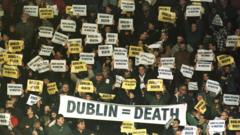
Reaction was sharply divided. Cunningham said many at the club took the bid seriously while some supporters rejected the idea outright; long-time fan Ivor Heller said, "I hated it. I thought it was absolutely ridiculous," and produced placards at Selhurst Park that read 'Dublin = Death'. The Football Association of Ireland also opposed the proposal, fearing it would damage their domestic league, even as Kinnear pictured a pathway for more Irish internationals to emerge.
After roughly 18 months of negotiations the line to Hammam went dead, calls and correspondence were unanswered, and Higgins kept an unsigned contract among his files. Hammam's subsequent sale of an 80% stake to Gjelsten and Rokke for £26m ended the consortium's hopes. The planned stadium site is now occupied by a shopping centre and Wimbledon later relocated to Milton Keynes in 2004; in the wake of those moves AFC Wimbledon were formed and began life in the ninth tier with Heller among four co-founders.
Three decades after the Dublin proposal, AFC Wimbledon are a League One side and have returned to Plough Lane, a development Kenny Cunningham described as the club's greatest achievement: "You talk about the FA Cup, league finishes, cup semi-finals, but for me what they've done, that's the biggest achievement in the history of the football club." He added of the Dublin idea, "The Dublin thing? It's a bit of nostalgia now, maybe a bit of sadness at a missed opportunity. 'People would be laughing now but it's something that would have worked, no doubt about it. Absolutely, people would have rowed in behind it.'"