Bajaj or Bibiano: AIFF must resolve India U-15 coaching standoff before World Cup

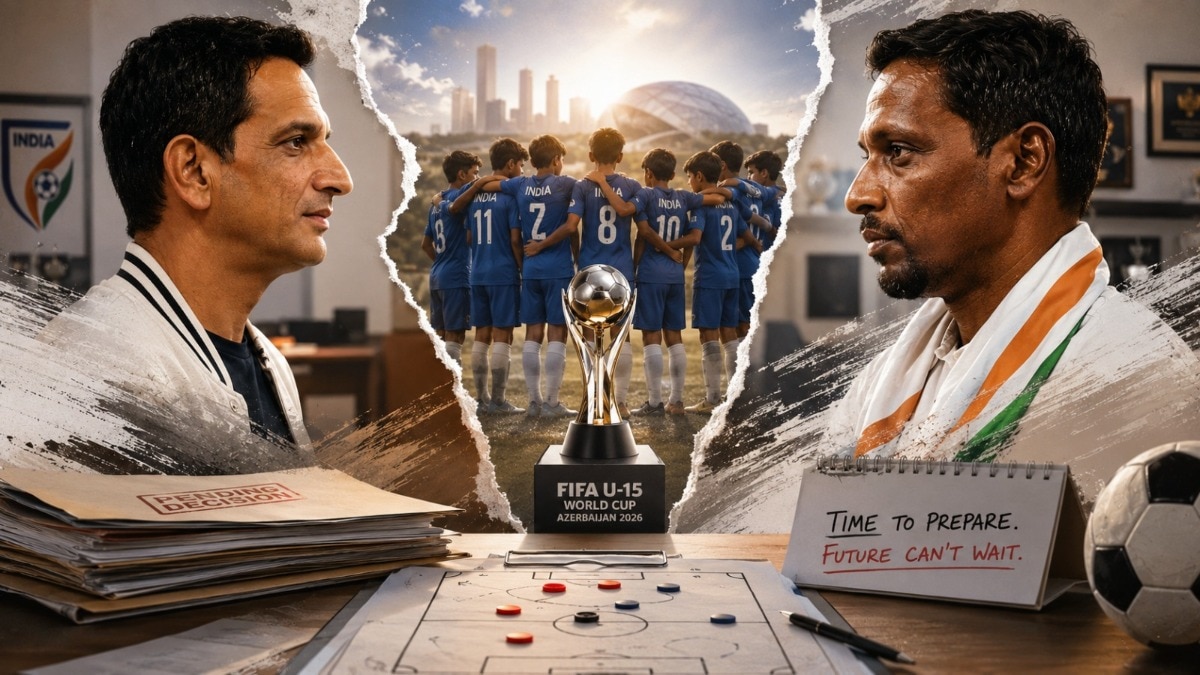
Ranjit Bajaj and Bibiano Fernandes are at odds over roles in India’s U-15 setup as the inaugural FIFA U-15 World Cup and Festival in Azerbaijan approaches, and the All India Football Federation (AIFF) has yet to clarify who will lead the team after confirming appointments only a couple of days ago. Bajaj, owner of Minerva Academy, says he will accept the manager’s role only if granted full control, while Fernandes is reported to have reservations about the proposed structure and support staff.
Bajaj initially signalled he would reject the position but has now said he is willing to take charge provided he has a free hand to appoint his staff; he also presented a long-term plan to the AIFF technical committee focused on ambitions for the 2034 World Cup and 2036 Olympics. Fernandes is understood to be hesitant about accepting the head coach’s post amid differences over coaching structure. The AIFF approved Bajaj as manager through its Executive Committee following Fernandes’ appointment as head coach, but both men have expressed concerns publicly and the federation has not issued a substantive response.
Bajaj addressed the situation in a video posted on Instagram, saying: "I just got to know through a trusted source and an article in the newspaper that Bibiano has also said no, citing exactly the same reasons which I have said, because any good coach will say that, because he doesn’t want to sabotage his own team. That people with two visions and philosophies cannot actually be doing it together." He added that he would step in if Fernandes is not part of the setup.
On his willingness to lead, Bajaj said: "It’s still not too late if Bibiano is not going to be there. So, if you think all this is drama, then find out what people say here that I sit here from morning to night, and only one thing: every decision in my life is based on one thing, that I make a decision on how this is going to help me get to the 2034 World Cup and 2036 Olympics." He later said: "I am prepared, I am ready. Giving up is not in the blood. In fact, if I get this, I am going to work even harder."
Bajaj has framed his earlier objection as being to the proposed structure rather than to working for the national team: "I can never say no to my country. It was saying no to the fact that I don’t want to sabotage my own country. I want to help it. So, if that is the case, then Ranjit Bajaj will die but not say no to my country," he said. He had previously volunteered to lead the project on the condition he could appoint his own coaching staff and deliver his long-term plan.
The tournament’s format is unconventional: the inaugural U-15 World Cup and Festival will include all 211 FIFA member associations, be played eight-a-side with matches of two 20-minute halves, and allow each team to register 14 players, including up to two goalkeepers. India’s participation is its first chance at a FIFA World Cup at this level, and the smaller-sided format increases the importance of combinations, decision-making and player understanding, according to the reporting.
Fernandes and Bajaj advocate different playing approaches — Bajaj for a high-pressing, attacking style and Fernandes for defending deep and launching quick counter-attacks — which raises questions about how responsibilities should be allocated if both are to shape the same youth side. The AIFF is also reported to have considered Minerva Academy technical director Surinder Singh as an alternative should Fernandes decline, but the federation’s public silence has extended the uncertainty and reduced preparation time for the squad.
Players and staff now risk losing valuable training and selection time that, the reporting says, is needed to scout the right players, assess combinations, bring the group together and establish an identity suitable for the eight-a-side format. The federation is being asked to confirm whether it will grant Bajaj sole authority, clarify Fernandes’ involvement, or appoint a different structure so that preparation can begin in earnest; the World Cup will not wait while the federation sorts internal disagreements and the players should not have to pay the price for them.