Hope’s transformation: from criticised slow-starter to white-ball powerhouse


At Eden Gardens in March, in a must-win virtual quarterfinal of the T20 World Cup, India defeated the West Indies by five wickets in the final over as Sanju Samson finished an unbeaten 97.
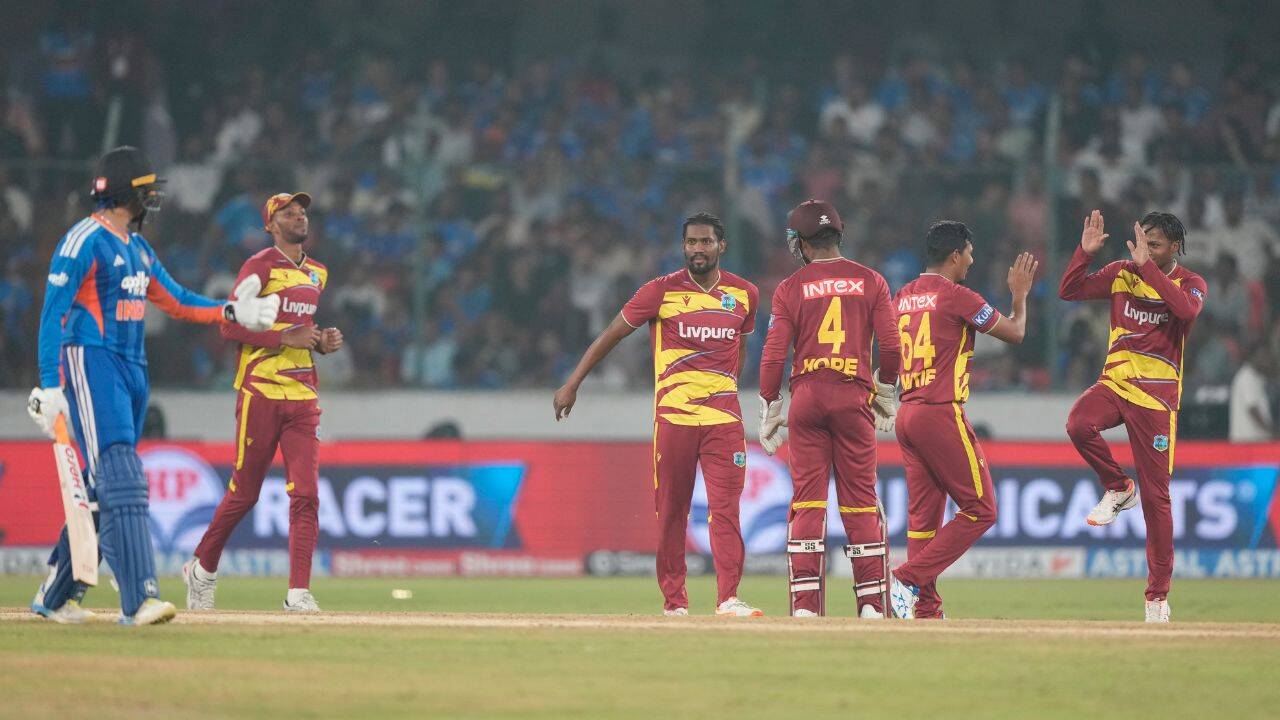
West Indies had posted 195 for four after being put in, with Roston Chase contributing a 25-ball 40, Shimron Hetmyer striking 27 off 12, and Rovman Powell and Jason Holder finishing unbeaten on 30s after adding 76 in 35 deliveries; Powell and Holder hit five sixes between them. Despite the Caribbeans holding the momentum at the interval and a 70,000-strong home crowd, the Indian chase was clinched late, and West Indies captain Shai Hope faced sustained questioning at the post-match press conference about his "approach" and "strike-rate" after a 32 off 33-ball innings.
Hope has since set out to answer those critics with form on India’s white-ball tour: although West Indies lost the high-scoring One-Day International series 1-2, he followed a century in game two with an unbeaten 162 in the dead rubber at New Chandigarh when West Indies completed what the article describes as their highest successful run chase in ODI history. His outputs in India extended beyond the ODIs and into the ongoing T20I series.
Since arriving in India, Hope’s scores in ODIs were 12 (14b), 104 (94) and 162 not out (143); his T20I returns were 52 (37), 102 not out (45), 5 (5) and 102 not out (50). He recorded centuries in matches two and four of the T20I series, leaving the showdown finely balanced at 2-2 going into Saturday’s decisive contest in Bengaluru.
The manner of Hope’s innings has been notable: he has largely employed orthodox technique, used the straight field against pacers and spinners, and combined balance, timing and placement with periodic big hitting. His batting has included mostly correct shaping of shots, with the article citing only one clear miscue — an agricultural hoick against Arshdeep Singh in the third T20I in Indore — which allowed India to exploit that opportunity; Arshdeep took three wickets, was named Player of the Match and spoke of the specific "plans" India had for the batters.
Statistically, Hope has amassed more than 500 runs in seven limited-overs international innings with four centuries — two in ODIs and two in T20Is. The article places his T20I achievements in context: until Wednesday only 13 players had three T20I hundreds, and five others — Rohit Sharma and Glenn Maxwell (five each), and Phil Salt, Austria's Karanbir Singh and Suryakumar (four apiece) — had more three-figure T20I knocks than Hope; he is now listed among 19 players with three or more T20I centuries.
The piece also reports that Hope’s ability to win over Indian crowds has been evident, notably in Hyderabad where local favourites Abhishek Sharma, Ishan Kishan and Nitish Kumar Reddy did not produce significant contributions. At the same time, the article raises questions about India’s preparedness and their failure, so far, to find consistently effective plans to contain Hope, singling out both the tactical group led by Shreyas Iyer and head coach Gautam Gambhir and the bowling execution as areas under scrutiny.
Saturday’s decisive T20I at the Chinnaswamy Stadium in Bengaluru is Hope’s last international appearance in the immediate future, as he has been granted a leave of absence from the Test series in Bangladesh starting later this month; a West Indies win in Bengaluru would hand them a second bilateral series victory over India in three years, after their 3-2 series win in August 2023.