Why so few African players feature in England's WSL

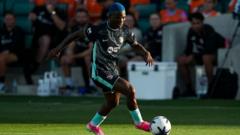
At the Women's Africa Cup of Nations this month, Malawi forward Temwa Chawinga scored five goals and assisted two, and BBC Sport on 20 August 2026 examined why so few African players play in England's Women's Super League.
The WSL has attracted top international talent in recent seasons, with two-time Ballon d'Or winner Alexia Putellas joining London City Lionesses this summer and a steady flow of players from Europe and elsewhere. High-profile signings from other nations include Australia captain Sam Kerr, who made 158 appearances for Chelsea before joining Gotham, and United States internationals such as Chelsea duo Alyssa Thompson and Naomi Girma, Arsenal's Emily Fox and Manchester City's Sam Coffey. Asian talent has also arrived, with Japan captain Yui Hasegawa among Manchester City's key players. BBC Sport notes the WSL currently lists just four African players: Chiamaka Nnadozie (Brighton and Nigeria), Aisha Masaka (Brighton and Tanzania), Rofiat Imuran (London City Lionesses and Nigeria) and Ines Belloumou (West Ham and Algeria).
Clubs in the United States' NWSL have demonstrated strong interest in African players and paid significant fees for some of the continent's best. Zambia forward Racheal Kundananji became the most expensive women's footballer at the time in 2024 when she joined Bay FC from Madrid CFF for £685,000, and Barbra Banda plays for Orlando Pride and was voted the BBC Women's Footballer of the Year in the same year. Monique Ngock, Wafcon player of the tournament, is at Washington Spirit, where six African international players currently reside. Temwa Chawinga won the NWSL Golden Boot and Most Valuable Player awards in her first two seasons with Kansas City Current, while her sister Tabitha Chawinga plays for Lyon and helped Malawi reach the Wafcon final last week, where they lost to Cameroon. Michaely Bihina, a standout at Wafcon for Cameroon, plays for Benfica.
A significant practical hurdle for WSL clubs is the Governing Body Endorsement criteria in the league's registration rules, which require foreign players to earn a minimum number of points across five categories to be eligible for a GBE visa. Factors such as the number of caps for a national team, appearances in the Women's Champions League and the ranking of former clubs contribute to those points totals. WSL clubs also compete with the wages and transfer fees offered by NWSL teams for top African players and must allocate limited scouting resources, which are currently prioritised across Europe.
Coverage of domestic women's football in Africa and problems around this edition of Wafcon have also been cited as barriers to visibility. The Confederation of African Football named Channel 4 as the UK broadcast partner but no matches were shown live in the opening round because an agreement had not been formally reached, and the tournament was postponed 12 days before its scheduled kick-off in Morocco, eventually taking place three months later. Switzerland captain Lia Walti, who signed for Brighton this summer, told BBC Sport: "I think you have to bring the game to the people. You kind of have to force people to watch it. I felt that was how it maybe started in England. In a lot of other countries I think they have bad coverage. It's not shown at all, or if it's shown, from where they film the game [makes it look] really poor. It affects the way you watch a game. You don't really see the speed, the tactics or anything and you don't enjoy watching the game."
Nigeria goalkeeper Chiamaka Nnadozie, who joined Brighton last year, was the first African goalkeeper to be shortlisted for the Women's Ballon d'Or and finished her season with an FA Cup final appearance at Wembley against WSL champions Manchester City. Reflecting on the impact of her Ballon d'Or nomination, she told BBC Sport in October: "We have so many good players and they just need the opportunity to show what they can really do. Very soon, we will have more numbers [in the Ballon d'Or nominations] from Africa. Trust me, there are so many good talents from Africa. Some players have had the opportunity to come to Europe but some have stayed back home. I hope in the future, bigger competitions will come to Africa. The Under-17s World Cup is in Morocco. This is big evidence that they are doing a lot of great jobs over there. It is just a matter of time. Women's football is rising and Africa shouldn't be left behind."
Malawi's route to the Wafcon final secured them a place in the Women's World Cup for the first time next year, and they will join champions Cameroon and semi-finalists Algeria and Morocco at the tournament.